Snoring and sleep apnoea
Observed pauses in breathing, waking with a choking sensation, restless or unrefreshing sleep: discussing your symptoms helps guide further investigations.
Understand the testsIs the displayed language different from your selection? Turn off your browser’s automatic translation or choose “Show original”.
Sleep clinic · Le Cannet-des-Maures
From night-time symptoms to daytime difficulties: a consultation to review your situation, choose appropriate tests and plan your follow-up.
Your consultation
Your nights, alertness, how you feel and your medical history are the starting point for your assessment.
Pôle Cannet Santé46 rue Ambroise Paré83340 Le Cannet-des-MauresBuilding A · 2nd floor above ground level · room 207
Getting to the clinicLift and free parking
Contact the clinic06 98 20 56 41
Reasons for a consultation
Persistent difficulties, signs noticed by those close to you or treatment that is becoming difficult to use are worth discussing.
Observed pauses in breathing, waking with a choking sensation, restless or unrefreshing sleep: discussing your symptoms helps guide further investigations.
Understand the tests
Falling asleep unintentionally, reduced alertness or fatigue on waking: these symptoms need to be distinguished and considered in context.
Prepare useful information
An uncomfortable mask, leaks, incomplete benefit, difficulty using treatment or wanting to stop: follow-up helps identify the reasons and adapt your care.
Find out about follow-up
Restless legs, difficulty sleeping or sleep paralysis: describe what happens, when it happens and how it affects your daily life.
Read frequently asked questionsIn children and adults alike, these difficulties may also prompt a review of sleep. The clinic offers sleep assessments but does not carry out any diagnostic tests for ADHD or provide specialist ADHD diagnosis.
Why assess sleep?For children, parents’ observations and difficulties staying alert at school are useful information for the consultation.
Common misconceptions
Your weight, age or sex alone cannot tell you whether you have sleep apnoea. Your symptoms and circumstances deserve attention.
Being overweight or obese increases the risk, but sleep apnoea also occurs in people without excess weight. The shape of the jaws and airways may play a role.
Almost one in four people with sleep apnoea in a 2025 study had a normal weight or were underweight.
Obesity is an important risk factor, not a diagnosis. Not everyone with obesity has sleep apnoea. Symptoms and medical assessment guide the decision to carry out a sleep study.
Women are affected too. The French national health insurance service, Assurance Maladie, states that men are around twice as likely to be affected; the condition becomes more common in women after the menopause.
In women, persistent fatigue, insomnia, headaches or mood changes may draw attention to the condition, even when snoring is less noticeable.
Sleep apnoea becomes more common with age, but it can occur in young adults and in childhood. In children, the tonsils, adenoids and nasal breathing are among the factors that should be assessed.
Sleep-related signs in childrenThe study published in 2025 combined four community cohorts in the United States and Switzerland, comprising 12,860 adults with a mean age of 66.6 years. Sleep apnoea was defined as an apnoea–hypopnoea index of at least 5 events per hour, including mild cases. It reported that 23.5% of people with sleep apnoea were of normal weight or underweight.
The proportion of people with sleep apnoea among those with obesity is a different question from the proportion of people with obesity among those with sleep apnoea. Figures also depend on age, population and the diagnostic threshold: they do not describe each patient’s individual risk.
Read the 2025 studyA risk factor alone is not enough to make a diagnosis, and its absence is not enough to rule one out. If you snore, have observed pauses in breathing, persistent fatigue or sleepiness, discuss this at your consultation.

Driving and work
Driving licences, working at height or hazardous work: find information on the procedures, the French Order of 28 March 2022, other relevant medical conditions, insurance and costs.
Children and adolescents
Mouth breathing, saliva on the pillow, difficulty waking and attention difficulties: discover the signs to consider together and prepare for the consultation.

At every stage of life
Menstrual migraine, pregnancy, gestational diabetes, gestational hypertension, pre-eclampsia, the postnatal period and menopause: making sleep part of your healthcare.
 Sleep and women’s health
Children and adults
A sleep disorder may contribute to daytime difficulties or coexist with ADHD. Consultations at the clinic assess sleep; they do not provide specialist ADHD diagnosis.
Understand why sleep should be assessedFor all ages
Adults, children and adolescents: prepare a family tree showing sleep-related signs and known medical history in your parents, grandparents, siblings, children and grandchildren.

Investigations
Tests are chosen after a medical assessment. Not every patient needs every test.

PG
Respiratory polygraphy is a breathing-focused sleep study. It records breathing and oxygen levels during the night, among other measurements. It helps identify sleep-related breathing disorders or assess treatment.
Sensors are fitted for the overnight recording. Instructions, arrangements for the test and returning the equipment will be explained when it is scheduled.
PSG
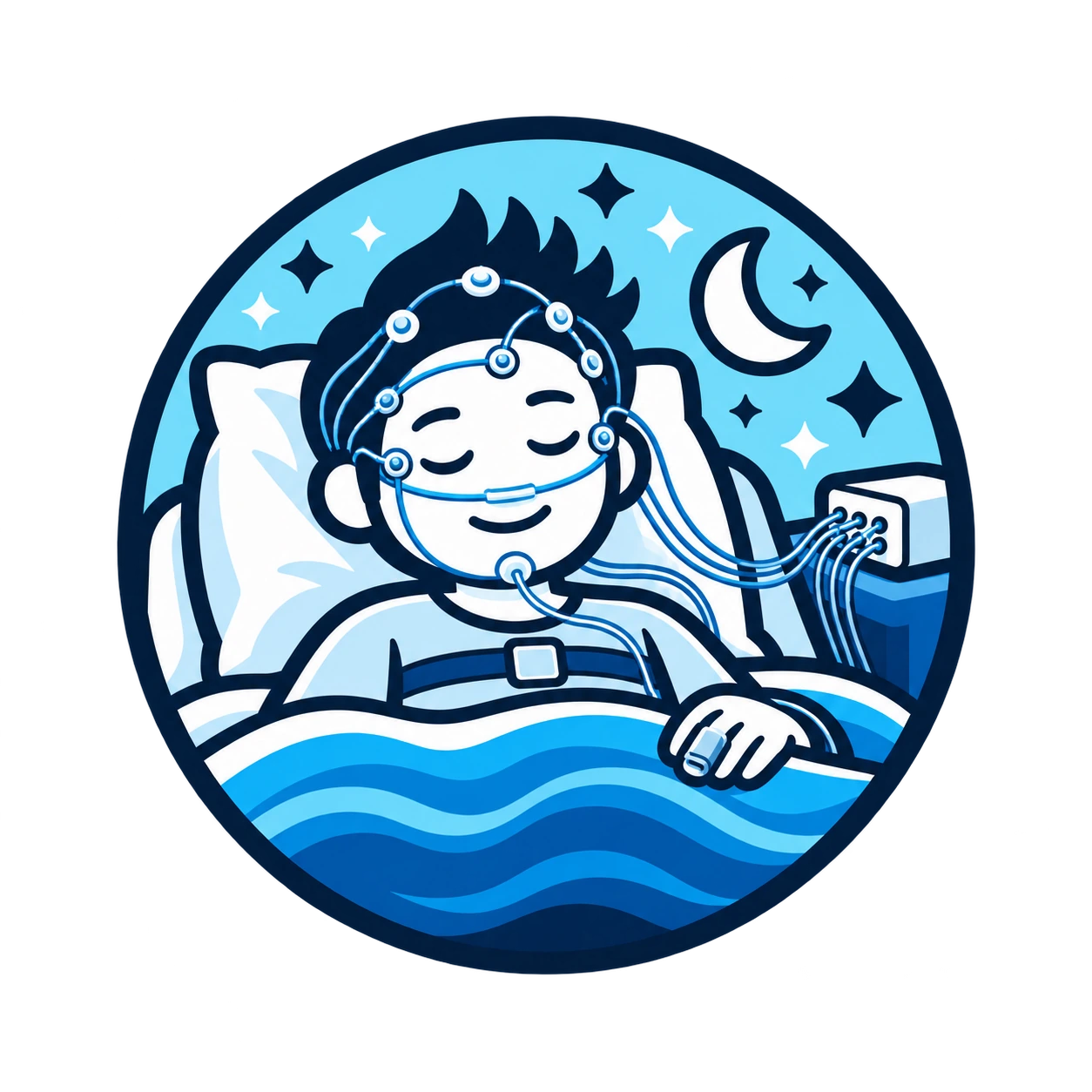
This adds measurements of sleep, sleep stages and certain movements to the breathing recording. It allows a more detailed investigation when appropriate.
The indication depends on your symptoms, existing results and the clinical question. It may be performed for diagnosis or while using treatment, as prescribed.
ALERTNESS
When indicated, additional tests can be arranged at a sleep centre to assess sleepiness or the ability to stay awake.
The Multiple Sleep Latency Test (MSLT) assesses the tendency to fall asleep under standardised conditions. The Maintenance of Wakefulness Test (MWT) assesses the ability to stay awake. The centre performing the test is responsible for preparation and interpretation.

After starting treatment
Follow-up considers how you feel, your use of treatment, its effectiveness and how well you tolerate it. With CPAP, the figures displayed by the machine alone are not enough to assess the outcome.
Whether you are starting treatment or already using equipment, a consultation allows us to review your situation and agree on useful adjustments.
Arrange my follow-upConsultations in FrenchCheck tolerance, usage and areas for improvement.
Review its effectiveness and decide on adjustments.
Reassess your situation and arrange the annual check while using treatment.
These milestones are adapted to your situation. If you have a problem, contact the clinic rather than waiting for your next review.
Your care pathway
The sleep centres and home healthcare providers listed here are trusted partners chosen by Dr Christophe Chevalier. He arranges referrals to these teams according to your situation and needs.
Dr Christophe Chevalier chooses the centre to which he refers you and explains the arrangements when prescribing your test. This referral is based on his confidence in the teams and the needs of your care.
DRAGUIGNAN
Dr Fabrice Thoin
345 avenue Pierre Brossolette
83300 Draguignan
07 68 09 46 07
draguignan@laboratoire-sommeil.fr
SOLLIÈS-PONT
Dr Christine Cheval
1 bis rue Lucien Simon
83210 Solliès-Pont
LA SEYNE-SUR-MER
Dr Flore Guillaume-Waguet
1361 avenue des Anciens Combattants d’Indochine
83500 La Seyne-sur-Mer
04 94 30 36 65
sommeil.cdo@elsan.care
When you start treatment, Dr Christophe Chevalier refers you to a trusted provider for CPAP set-up, support and technical follow-up. If you already use equipment, he reviews your follow-up and any useful adjustments with you. For day-to-day technical questions, contact the provider responsible for your care.
CPAP set-up, support and equipment follow-up at home.
Bastide: CPAP support (in French)Respiratory support, treatment set-up and follow-up at home.
ISIS Médical website and branches (in French)Respiratory support and help with CPAP treatment at home.
ARARD: CPAP support (in French)Respiratory support, set-up and follow-up of sleep apnoea treatment.
Premium Santé: CPAP support (in French)CPAP set-up and treatment support at home.
ORKYN: CPAP support (in French)CPAP set-up, adjustment and treatment follow-up at home.
VitalAire: CPAP support (in French)Respiratory support, CPAP installation and follow-up at home.
SOS Oxygène website and branchesLocal resources
This association provides information and raises awareness about sleep among the public and healthcare professionals. I am a member and invite you to discover its activities.
Information, personal stories and videos to better understand sleep apnoea and living with treatment.
Discover Alliance Apnées du Sommeil
Videos in French
Orofacial myofunctional rehabilitation with physiotherapy and hypnosis: complementary approaches discussed in this video.
Watch on YouTubeA video for parents about the orthodontist’s role in managing sleep-disordered breathing in children.
Video in French
Watch on YouTubeThe links between allergies and sleep disturbances.
Asthme & Allergies · Videos in French
Watch on YouTubeA complementary video on managing respiratory allergies in children, with Dr Camille Braun.
Hospices civils de Lyon · Videos in French
Watch on YouTubeBefore your appointment
Gather what you have available. If a document is missing, mention it during the consultation.
Record your nights, naps and how you feel in an interactive diary, with no account required. Prepare a record and summary to send through Doctolib. You can also download the Réseau Morphée paper diary and its instructions (in French).
Complete my diary online Download my sleep diary (PDF, in French)Fill it in each morning for the previous night and each evening for the day, ideally for three weeks. Approximate times are sufficient. Bring it to the consultation, even if incomplete.

Fees and reimbursement
Consultations and tests billed by the clinic are reimbursed by Assurance Maladie according to the rules that apply to your situation.
FEES
Dr Christophe Chevalier charges the standard fees agreed with Assurance Maladie, with no fees above the agreed rates.
FRENCH NATIONAL HEALTH INSURANCE
The clinic may bill Assurance Maladie directly for the portion it covers (tiers payant). In that case, you do not have to pay that portion upfront.
YOUR SUPPLEMENTARY HEALTH INSURANCE
Where a supplementary portion remains payable, you pay it at the clinic. Your supplementary insurer then reimburses it according to your policy’s cover.
| Consultation or test | Fee |
|---|---|
| Sleep consultation | €60 |
| First consultation — patient already using treatment equipment | €60 |
| Overnight respiratory polygraphy | €151.68 |
| Short-interval follow-up consultation | €35 |
| Results, equipment prescription and HAD questionnaire (Hospital Anxiety and Depression Scale, HADS) | €69.12 |
Amounts displayed on the clinic’s Doctolib profileConsultations in French, checked on 6 October 2026. These amounts are the fees billed, before reimbursement.
Cover depends in particular on your entitlement and compliance with the French coordinated care pathway. The statutory €2 contribution may remain payable unless you are exempt; it is not reimbursed by supplementary health insurance policies classed as contrats responsables.
Your questions
The consultation allows answers to be tailored to your personal situation.
Snoring alone is not enough to establish a diagnosis. Observed pauses in breathing, sleepiness and other symptoms are assessed alongside your medical history. A sleep recording may be recommended.
A consultation can be arranged to review your history, tests and treatment data. Bring the documents you have and your provider’s contact details.
Talk to the doctor before changing or stopping treatment. Neither feeling better nor losing weight is, on its own, enough to decide that the equipment is no longer needed.
This can be discussed according to the breathing disorder, its impact and your situation. It requires an appropriate dental assessment and checks of its effectiveness, among other steps.
Understand oral appliance treatmentAn urge to move your legs at rest, especially in the evening, relieved by movement, is worth describing to the doctor. Diagnosis is based on a clinical interview; further investigations may be considered depending on the context.
Find out more — Assurance Maladie (in French)If you use a connected device, some observations may help inform our consultation. Mention a night-time breathing alert or a persistent change in your sleep schedule or estimated sleep duration, especially alongside fatigue or sleepiness. Bring the record and the device’s name: together we can decide whether further investigation is needed.
A reassuring score or absence of alerts is not enough to rule out a sleep disorder. These data alone cannot justify changing or stopping your treatment.
Understanding sleep sensors — Institut National du Sommeil et de la Vigilance (in French)Do not drive when you are sleepy or at risk of falling asleep. Contact the doctor for an assessment; fitness to drive is governed by a specific framework.
Practical information
The clinic specialises in sleep, particularly night-time breathing disorders and their effects on alertness, in adults and children.
Your care forms part of your overall medical follow-up, in liaison with your designated primary care doctor (médecin traitant) and the professionals involved.
RPPS: 10002295748
Lift · Free parking
06 98 20 56 41Availability and appointment types are listed on Doctolib. Fees and reimbursement.
This information may be useful to someone close to you.
Healthcare professionals
I would like to connect with professionals with whom I can build suitable care pathways for my patients:
If you work in one of these areas, please contact me with details of your training, practice, age groups treated, practice location and professional contact details.
Following a discussion, I can consider working together and referring patients according to their needs.
Contact me as a healthcare professionalSecure messaging for healthcare professionals only. You can also telephone the clinic on 06 98 20 56 41.
christophe.chevalier@medecin.mssante.fr
Secure messaging for healthcare professionals only, not available to patients. For an appointment or a problem with your treatment, use the clinic’s contact details.

Scan this QR code with your phone’s camera to open the current French website.
sommeil-drcch.frI prepared the multilingual versions of this website with the help of artificial intelligence. Some wording may be imperfect. The suggestion form is temporarily unavailable.